

It is the question I am asked most often, in clinic and online. What does an LED mask actually do, and is one worth having at home?
I have used LED as part of skincare at Adonia Medical Clinic for over ten years. Not every mask is built the same, so here is how they work, and what to look for before you buy one.
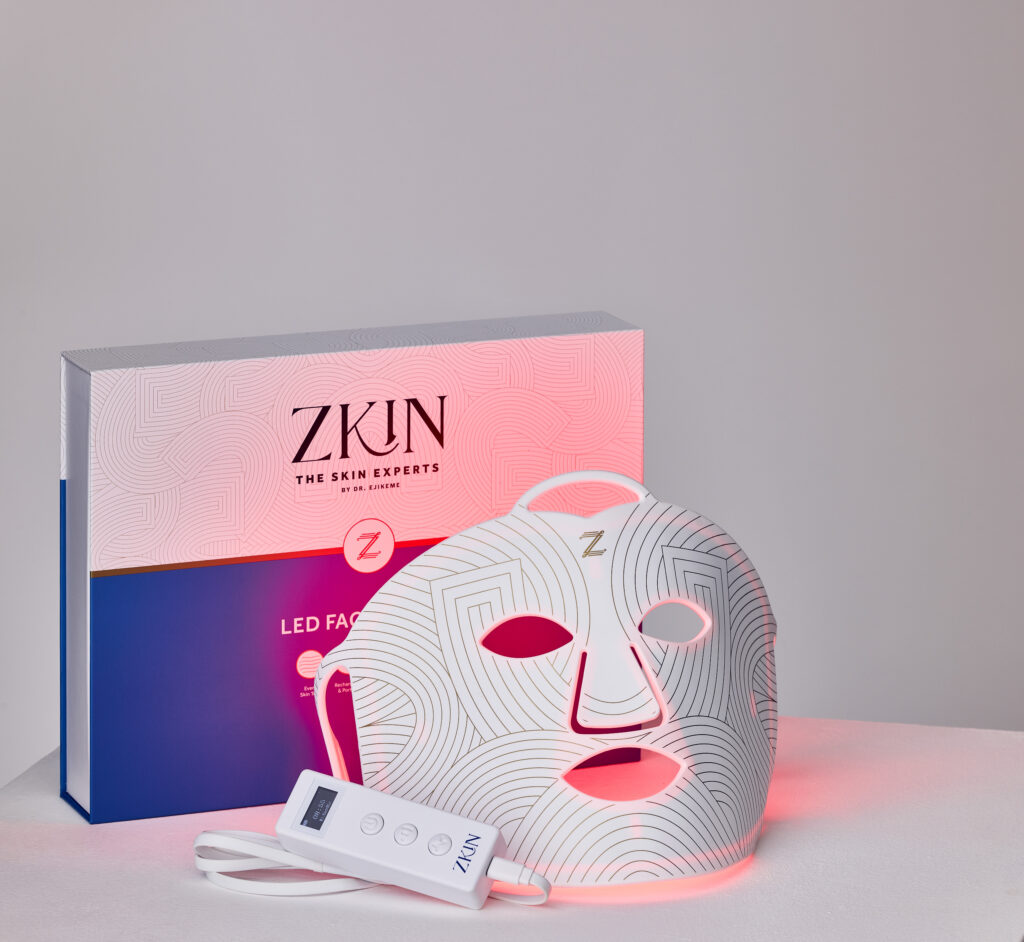
What an LED mask is
An LED mask uses specific wavelengths of visible and near-infrared light. There is no UV and no downtime. It is non-invasive, which is why it sits so comfortably alongside the rest of a skincare routine.
The wavelength is what sets one light apart from another. That is the single most important thing to understand.
The three lights
Red light (630 nm and 660 nm). Red light helps skin look firmer and smoother, and softens the appearance of fine lines.
Near-infrared (850 nm). Near-infrared sits just beyond visible light. Used alongside red, it improves skin glow for a refreshed, radiant look.
Blue light (460 nm). Blue light supports blemish-prone skin, for a clearer-looking complexion.
If you are investing in a mask, look for red, near-infrared and blue. These are the wavelengths used most widely in professional LED.
What to look for in an at-home mask
- The right wavelengths. Red, near-infrared and blue, stated clearly in nanometres. If a brand will not tell you the wavelength, walk away.
- Full coverage. Enough LEDs, spread evenly across the whole face.
- A fit that stays put. A flexible mask that sits close to the skin.
- Eye protection. Built in, not an afterthought.
- A session you will actually keep up. Ten minutes is realistic. Forty is not.
How to use it
Cleanse first, so nothing sits between the light and your skin. Wear the mask for one ten-minute session, three to seven times a week. Apply your serum and moisturiser afterwards.
Consistency is what matters. Many people find their skin looks brighter and more even after a few weeks of regular use. Everyone's skin is different, so results vary.
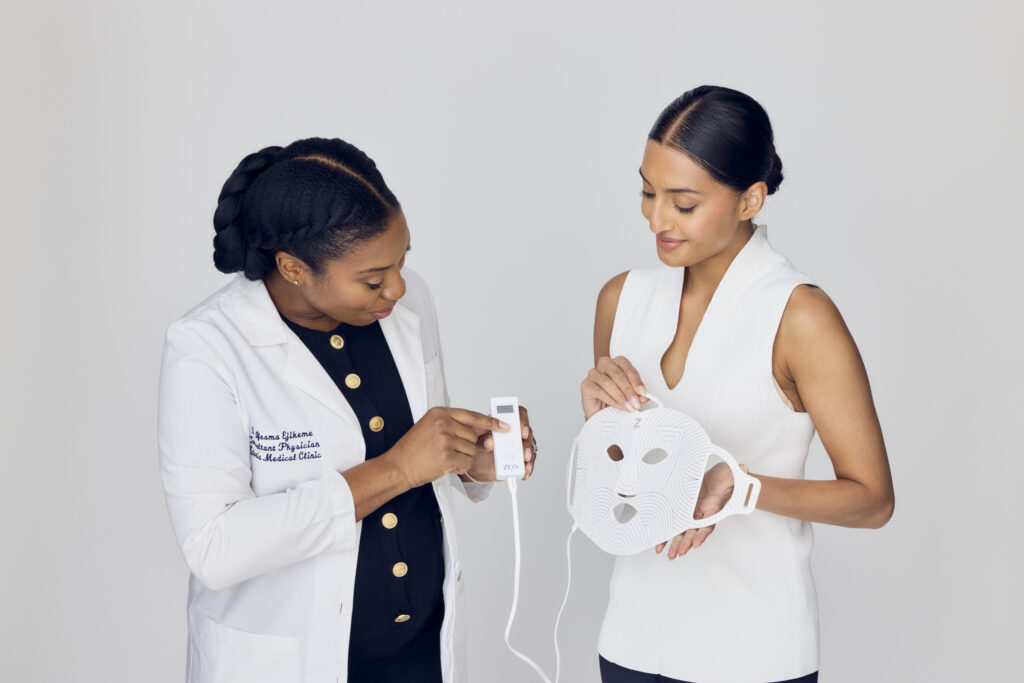
Before you start
LED masks are not suitable for everyone. Anyone should check with a doctor or pharmacist before use if pregnant or breastfeeding, taking any medication that increases sensitivity to light, or if there are any concerns about the skin. Always follow the instructions that come with the mask.
Why I made ZKIN
My patients kept asking which mask to buy for home. Too many of the options did not meet the standard I expect. So I designed one that does.
ZKIN uses red (630 nm and 660 nm), near-infrared (850 nm) and blue (460 nm) light across 122 LEDs, in a flexible medical-grade silicone mask with built-in eye protection. Three intensity levels. Ten-minute sessions. Cordless and rechargeable, so it fits into your evening rather than taking it over.
It is the mask I recommend, because it is the mask I would use.
Related reading
- How to use an LED face mask: your 10-minute evening routine
- At-home LED face mask or in-clinic LED: what is the difference?

Dr Ifeoma Ejikeme
Consultant Physician, founder of Adonia Medical Clinic and creator of ZKIN