
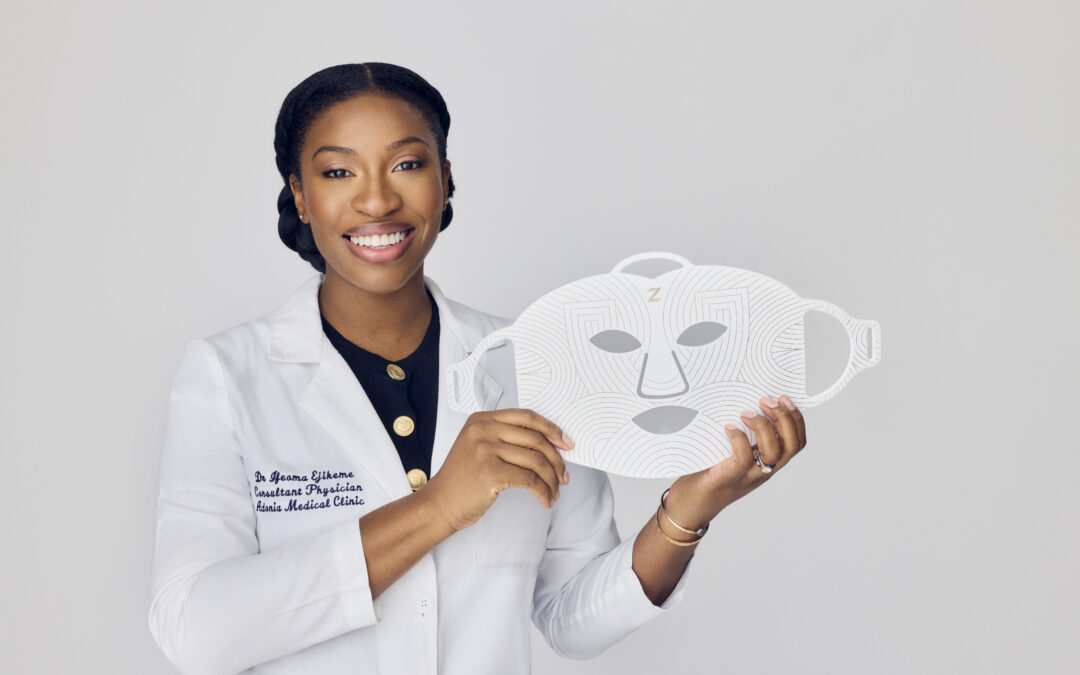
I have used LED in clinic at Adonia Medical Clinic for over ten years. So when patients ask how an at-home mask compares, I give them a straight answer.
They are different tools, and they suit different needs.

In-clinic LED
Clinic devices are larger and more powerful. Sessions are carried out by a professional, and are often booked alongside other facial treatments.
The limitation is frequency. Most people visit a clinic once a week at most, and LED is something you benefit from doing regularly.
At-home LED
An at-home mask runs at a lower intensity, and you use it more often: three to seven sessions a week, at home, on your schedule.
That consistency is the point. For keeping skin looking its best between appointments, a home mask is a convenient option.
When to choose which
- Clinic if you would like a professional assessment, or are already having other facial treatments.
- Home if you want LED as a regular part of your routine.
- Both if you want the best of each. Clinic for the professional sessions, home for the days in between.
What makes a good home mask
Look for red, near-infrared and blue light, stated in nanometres. Look for full, even coverage and a mask that sits close to the skin. Look for built-in eye protection. And choose a session length you will actually keep up.
Before you start
LED masks are not suitable for everyone. Anyone should check with a doctor or pharmacist before use if pregnant or breastfeeding, taking any medication that increases sensitivity to light, or if there are any concerns about the skin. Always follow the instructions that come with the mask.
That is the standard I set for ZKIN. It is the mask I would want my own patients to use between visits.
Related reading
- LED face masks explained, and what to look for in one
- How to use an LED face mask: your 10-minute evening routine

Dr Ifeoma Ejikeme
Consultant Physician, founder of Adonia Medical Clinic and creator of ZKIN