

Do LED face masks work? It is the question I am asked more than any other, in clinic and online, and it is one of the most searched skincare questions there is.
I have used LED in clinic at Adonia Medical Clinic for over ten years. I know what it does well, and where it falls short. Here is my honest answer.
The short answer
A good LED face mask, used consistently, is a worthwhile addition to a skincare routine. It is not a miracle, and it does not replace the basics. But it is one of the few skincare devices I am happy to recommend.
Those two words matter: good and consistently. Most of the disappointment I hear about comes down to one or the other. Either the mask was not well made, or it ended up in a drawer after a fortnight.
How LED works on the skin
An LED mask shines specific wavelengths of light onto the skin. There is no UV, no heat to speak of and no downtime. Each wavelength is chosen for a different job, and the wavelength is what separates one light from another.
- Red light (630 nm and 660 nm) helps skin look firmer and smoother, and softens the appearance of fine lines.
- Near-infrared (850 nm) sits just beyond visible light. Used alongside red, it supports a refreshed, radiant look.
- Blue light (460 nm) supports blemish-prone skin, for a clearer-looking complexion.
These are the wavelengths used most widely in professional LED. Research into red and near-infrared light for the skin has grown a great deal over the past decade, although studies vary in size and quality. That is one more reason to be wary of any mask that promises dramatic overnight change.
What you can realistically expect
- Glow. Many people find their skin looks brighter within a few weeks.
- Smoother, firmer-looking skin. Red and near-infrared light help skin look firmer and soften the appearance of fine lines, over eight to twelve weeks.
- Clearer-looking skin. Blue light supports blemish-prone skin.
Results build gradually and vary from person to person. In the first two to four weeks, most people notice their skin looks a little brighter and more even. Changes in how firm and smooth the skin looks take longer, which is why I ask patients to keep going for at least eight weeks before they decide.
It helps to take a photo on day one, in the same light and at the same time of day, and another at week eight. Day-to-day changes are hard to see in the mirror. Side by side, they are much easier to judge.
Who tends to get the most from LED
In my experience, the people who are happiest with LED are those who want their skin to look healthier overall, rather than fix one dramatic concern overnight. It suits people who:
- want a brighter, more even-looking complexion
- are noticing the first fine lines and want skin to look firmer
- have blemish-prone skin and want a gentle addition to their routine
- have sensitive skin that does not tolerate strong peels or harsh actives well
- want something they can do at home, around work and family
LED is also suitable for all skin tones, including melanin-rich skin, which is something I care about deeply. I have written about that separately in LED face masks for darker skin tones.
Why some LED masks disappoint
- Wrong or unlisted wavelengths. Look for red, near-infrared and blue, stated in nanometres. If a brand will not tell you the wavelength, walk away.
- Poor coverage. Too few LEDs, or LEDs bunched in a few places, leave parts of the face untreated.
- A poor fit. A rigid mask that sits away from the face is less comfortable and less likely to be used.
- Sessions that are too long. A mask that asks for 20 or 30 minutes a day is hard to keep up.
- Inconsistent use. The most common reason of all. LED rewards routine.
What an LED mask will not do
Being honest about the limits is part of a good answer. An LED mask will not replace sunscreen, which remains the single most important step for keeping skin looking healthy. It will not give the same result as a clinical treatment such as a peel, microneedling or injectables. And it is not a treatment for a skin condition. If you have persistent acne, pigmentation that is changing, or a mark you are worried about, please see a doctor or dermatologist first.
At-home LED face mask or clinic?
Clinic devices are more powerful, but most people visit once a week at most. A home mask runs at a lower intensity and is used three to seven times a week. For a regular routine, home use makes sense. Some people choose both: clinic sessions alongside other treatments, and a home mask for the days in between.

How to get the best results
- Use it on clean, dry skin, so nothing sits between the light and your skin.
- Ten minutes, three to seven times a week.
- Apply your serum and moisturiser afterwards.
- Pick a fixed time, such as after your evening cleanse, so it becomes a habit.
- Keep going for at least eight weeks before you judge it.
If you would like a step-by-step version, my 10-minute evening routine shows exactly how I fit LED around the rest of my skincare.
Your questions answered
Does it hurt or feel hot?
No. Most people feel a gentle warmth at most. It is a calm ten minutes, and the mask is light enough to wear while you read or answer emails.
Can I use it with my other skincare?
Yes. Use the mask on clean skin, then apply your usual products afterwards. If you use prescription skincare, or anything that makes your skin more sensitive to light, check with your doctor or pharmacist first.
What about my eyes?
Choose a mask with eye protection built in. The ZKIN mask has soft eye shields, so you do not need separate goggles.
Before you start
LED masks are not suitable for everyone. Check with a doctor or pharmacist before use if you are pregnant or breastfeeding, take any medication that increases sensitivity to light, or have any concerns about your skin. Always follow the instructions that come with the mask.
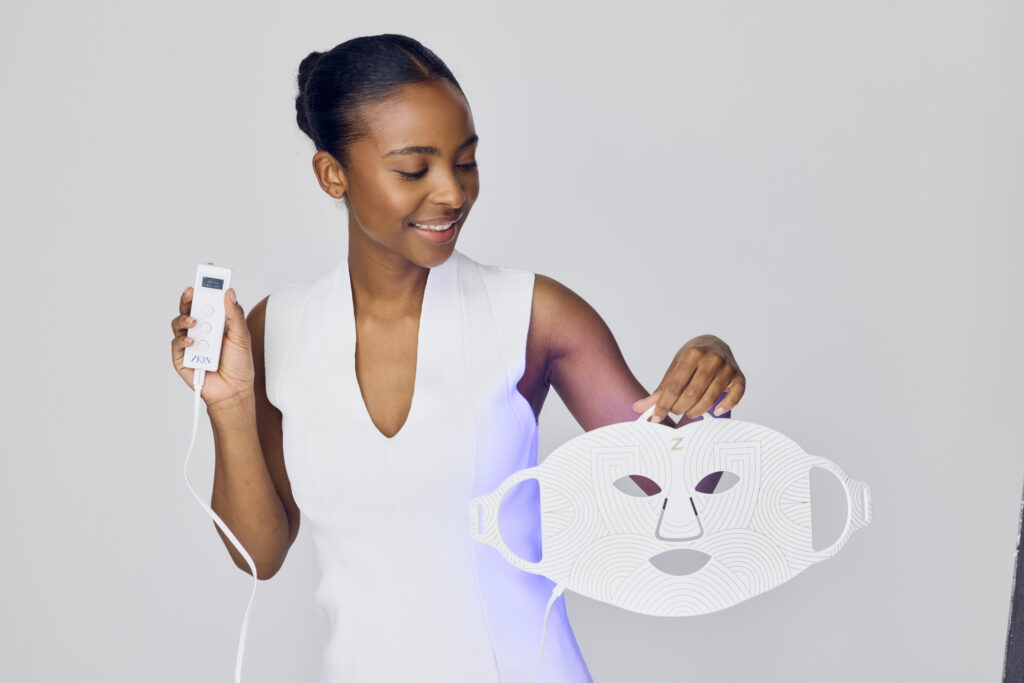
I designed ZKIN to meet the standard I expect for my own patients: red (630 nm and 660 nm), near-infrared (850 nm) and blue (460 nm) light across 122 LEDs, in a flexible medical-grade silicone mask with built-in eye protection and ten-minute sessions.
Related reading
- LED face masks explained, and what to look for in one
- At-home LED face mask or in-clinic LED: what is the difference?
- LED face masks for darker skin tones: what you need to know

Dr Ifeoma Ejikeme
Consultant Physician, founder of Adonia Medical Clinic and creator of ZKIN