

When skin breaks out, the instinct is to do more. More products, more scrubbing, more acids. That usually makes it worse.
Acne-prone skin needs a calm, consistent routine. Here is the one I recommend.
Morning
- Gentle cleanser. Non-stripping, fragrance-free. Skin should not feel tight afterwards.
- Treatment serum. Niacinamide is a good place to start. It helps balance oil and supports a more even-looking tone.
- Light moisturiser. Look for "non-comedogenic". Oily skin still needs moisture.
- SPF 30 or higher. Every day. Sun makes post-spot marks darker and longer-lasting.
Evening
- Cleanse. Twice if you have worn make-up or sunscreen.
- An active. Salicylic acid unclogs pores. Retinoids help keep them clear. Introduce one at a time, two or three nights a week to start.
- Moisturise.
What to avoid
- Harsh scrubs and rough cloths.
- Layering several strong actives at once.
- Heavy, oily products on breakout areas.
- Picking, squeezing or popping. This is the biggest cause of dark marks and scars.
Where LED fits
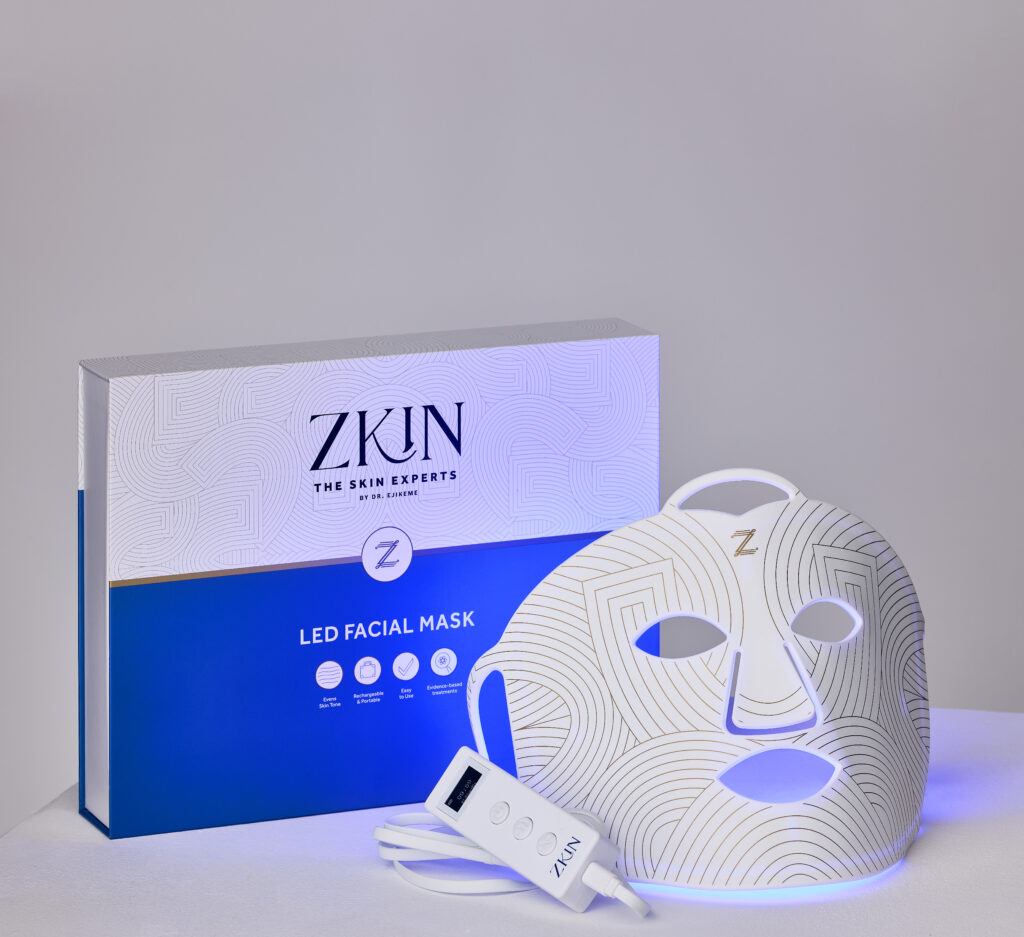
Blue light supports blemish-prone skin, and red light improves skin glow. Use the mask on clean skin before your evening active. If you have melanin-rich skin or are prone to dark marks, stick to red and near-infrared.

When to see a doctor
If you have deep, painful spots, if your acne is leaving marks or scars, or if it is not settling after three months of good skincare, see your GP or a dermatologist. Prescription treatment is effective, and the sooner it starts, the less chance of scarring.
This article is general skincare information, not personal medical advice. If you are worried about your skin, speak to your GP or a dermatologist.
Related reading
- LED face masks for darker skin tones: what you need to know
- How to use an LED face mask: your 10-minute evening routine

Dr Ifeoma Ejikeme
Consultant Physician, founder of Adonia Medical Clinic and creator of ZKIN